
Can a Child’s Cavity Be Treated Without Drilling? A Parents Guide to SDF Treatment
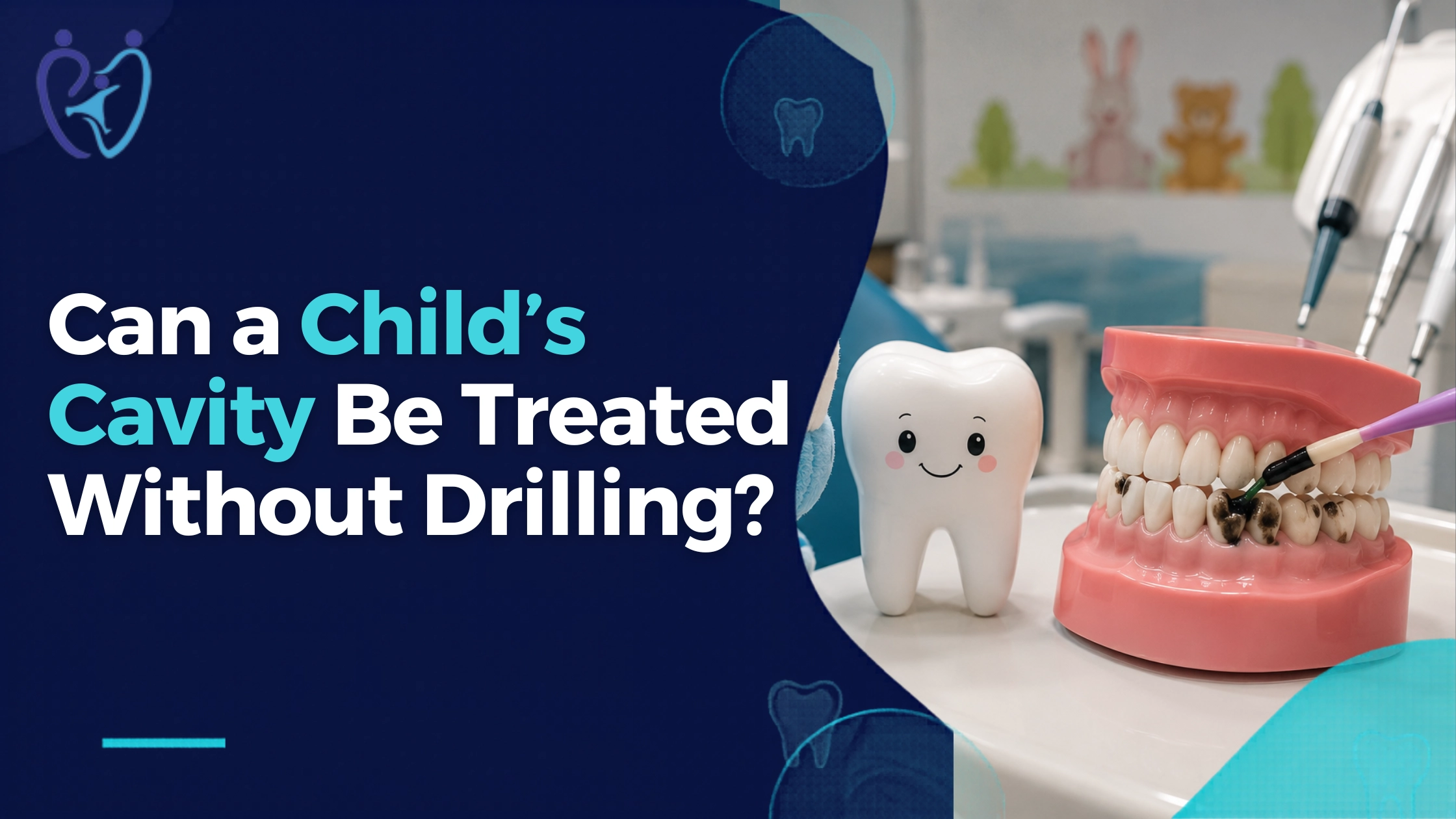
Hearing that your child has a cavity usually brings one immediate thought: drilling. For some children, though, that may not always be the first step.
Silver diamine fluoride, commonly called SDF, is a liquid used in certain cases to help stop tooth decay from progressing. A pediatric dentist in Kharghar may consider it when a cavity is suitable for non-invasive management, particularly when conventional treatment would be difficult for the child at that moment.
SDF is useful, but it is not a replacement for every filling. Understanding where it fits helps parents make a more informed decision.
What exactly is SDF?
Silver diamine fluoride is applied directly to an area of tooth decay. It contains silver, which has antimicrobial properties, and fluoride, which helps strengthen tooth structure.
There is no drilling involved during the application itself. The dentist isolates the tooth, applies a very small amount of the liquid to the decayed area and allows it to absorb.
The procedure is usually quick, which can make it helpful for children who struggle to sit through longer dental treatment.
A pediatric dentist in Navi Mumbai will first examine the cavity to decide whether SDF is appropriate. The depth of decay, symptoms and condition of the tooth all matter.
When might a dentist suggest it?
SDF is often considered when the immediate goal is to control decay rather than restore the shape of the tooth.
It may be discussed when:
- A young child is anxious about dental procedures
- Cooperation during drilling may be difficult
- Several cavities need to be managed
- Conventional treatment needs to be delayed
- A baby tooth needs decay control while the dentist monitors its condition
There are also situations where SDF simply will not be enough.
A tooth with severe pain, swelling, infection or deeper involvement may require different treatment. This is why parents should not think of SDF as a universal "no-drill filling".
The black staining parents should know about
This is probably the most important practical point.
SDF can turn active decayed tooth structure dark brown or black. The healthy parts of the tooth do not normally become black in the same way, but the cavity itself can become visibly darker.
That colour change can be quite noticeable, particularly on a front tooth.
For a back baby tooth, some parents may be comfortable with the appearance if the treatment helps control decay. For a visible front tooth, appearance may carry more weight in the decision.
A pediatric dentist in Kharghar should discuss this before treatment so parents know what to expect rather than being surprised afterwards.
Does SDF actually remove the cavity?
No.
This is an important distinction. SDF is intended to arrest, or stop, active decay in suitable cases. It does not rebuild the missing part of the tooth.
The child may later need a filling or another restorative procedure depending on the tooth and how it progresses.
Think of SDF as decay management rather than tooth reconstruction.
Follow-up matters too. The dentist needs to check whether the decay has become inactive and whether another application or a different treatment is needed.
Is SDF useful for children who are scared of dentists?
It can be.
Some children become distressed by the sound of dental instruments, local anaesthesia or simply having to remain still for a longer procedure. For an appropriate cavity, a short SDF application may reduce the immediate treatment burden.
That does not mean every nervous child should receive SDF.
A pediatric dentist in Navi Mumbai still has to consider whether controlling the decay this way is clinically suitable. A child's anxiety should influence how treatment is delivered, but it should not override what the tooth actually needs.
What happens after treatment?
Parents still need to maintain good oral care at home. SDF does not protect a child from developing new cavities elsewhere.
Continue with regular brushing using an age-appropriate fluoride toothpaste, supervise younger children while they brush and pay attention to frequent sugary snacks or drinks.
Parents should also return for the follow-up recommended by the dentist.
Watch the treated tooth and seek advice sooner if your child develops:
- New or persistent pain
- Swelling around the tooth
- Difficulty eating
- A broken or crumbling tooth
- Sensitivity that becomes worse
A pediatric dentist in Navi Mumbai can then reassess whether the tooth remains suitable for monitoring or now needs restorative care.
So, can drilling sometimes be avoided?
Yes, in selected cases. SDF gives dentists another way to manage certain childhood cavities without immediately using a drill. Its biggest limitation is equally clear: it stains decay dark and does not physically restore lost tooth structure.
Dr. Pol's Dental Clinic provides children's dental care in Kharghar, including preventive and restorative treatment. Parents considering SDF can consult the clinic to understand whether this approach is appropriate for their child's tooth and current dental needs.
FAQs
1. Does SDF hurt when applied?
Application itself is generally quick and non-invasive. The dentist will still examine the tooth first to make sure SDF is suitable.
2. Will the entire tooth turn black?
Usually, the decayed area is the part that darkens. A pediatric dentist in Kharghar can explain the expected appearance before treatment.
3. Can SDF permanently replace a filling?
Not always. Some teeth may later require a filling or another treatment depending on their condition.
4. Can SDF be used on permanent teeth?
It may be considered in selected situations, but the decision depends on the tooth, location of the decay and treatment goals.
5. How will I know if SDF has worked?
The dentist checks the tooth during follow-up visits to see whether the decay has become inactive and whether further treatment is required.
