
Whitening Strips or Professional Whitening: Which One Is Right for Your Teeth?
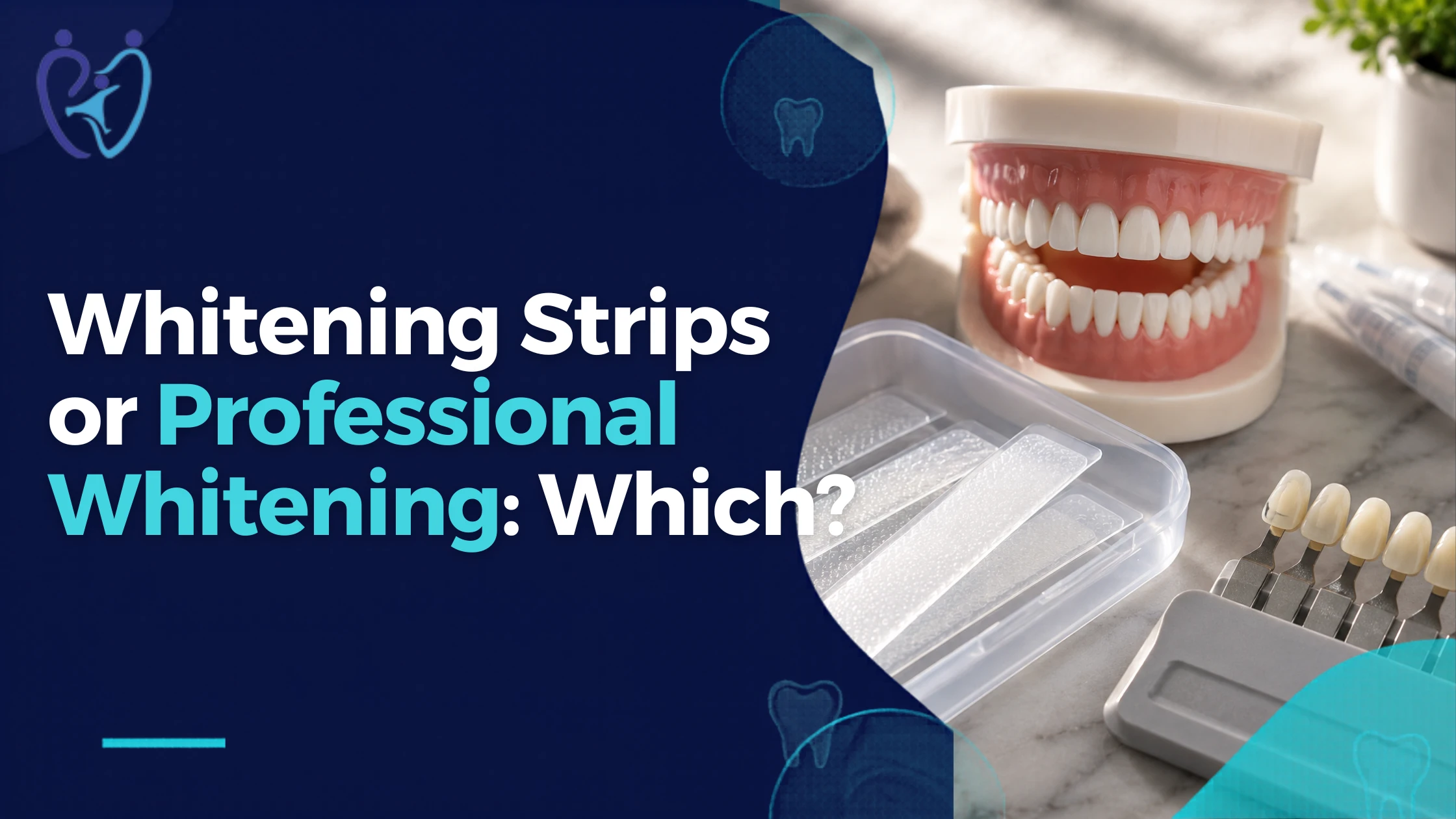
Walk through a pharmacy or browse online and you will find plenty of products promising whiter teeth at home. Whitening strips are among the easiest to buy, and their convenience makes them tempting. But convenience and suitability are two different things.
Professional teeth whitening starts from a different place. Instead of assuming every stain should be treated in the same way, a dentist first looks at why the teeth appear darker and whether whitening is appropriate at all.
So, which option makes sense? It depends on your teeth, your expectations and, importantly, what is causing the discolouration.
Whitening strips are simple, but they have limits
Whitening strips contain a bleaching agent and are placed over the teeth for a specified period. Used correctly, they may lighten some surface and age-related discolouration.
Their appeal is obvious. You can use them at home, they are readily available, and there is no dental appointment involved.
The problem is that a strip cannot examine your mouth first.
You may have an untreated cavity, gum irritation, exposed root surfaces or sensitivity that makes whitening uncomfortable. You may also have a type of discolouration that responds poorly to bleaching.
Another practical issue is contact. Strips need to sit against the tooth surface, and teeth are rarely perfectly straight. Crowding or uneven positioning can make the whitening effect less uniform.
Professional whitening begins before the bleaching
With professional teeth whitening, the first useful step is actually the dental assessment.
A dentist can check whether the discolouration is mainly external or comes from within the tooth. This matters because not every dark tooth needs more whitening products.
For example, one tooth that has become noticeably darker than the teeth beside it deserves investigation. Simply covering it with a whitening strip could delay finding out why its colour changed.
A dental assessment can also identify:
- Tooth decay that should be addressed first
- Gum problems or inflammation
- Existing tooth sensitivity
- Crowns, veneers or fillings in visible areas
- Cracks or exposed tooth surfaces
That assessment is one of the main differences between buying a whitening product and receiving cosmetic dentistry care.
Your fillings and crowns won't whiten with your teeth
This catches people out.
Bleaching products work on natural tooth structure. Existing tooth-coloured fillings, crowns and veneers do not respond in the same way.
Suppose you have a crown on a front tooth that currently matches the surrounding teeth. If those natural teeth become lighter after whitening, the crown may suddenly look darker even though nothing has happened to the crown itself.
That doesn't automatically mean whitening is off the table. It means the existing dental work needs to be considered when planning the final shade.
This is particularly relevant when cosmetic dentistry involves more than one part of the smile.
What about sensitivity?
Both home and professionally supervised whitening can cause temporary tooth sensitivity in some people.
It may feel like a short, sharp response when drinking cold water or breathing in cool air. Gum irritation can also occur if whitening material repeatedly contacts the soft tissues.
If you already have sensitive teeth, don't assume you simply need to tolerate more discomfort to get a result. The reason for the sensitivity should be considered first.
Using whitening products more frequently than instructed is not a shortcut either. More product or longer exposure does not automatically produce a better outcome and can increase discomfort.
Ask yourself what you are actually trying to change
"Whiter teeth" sounds straightforward until you look closely at the problem.
Coffee, tea and tobacco can contribute to staining. Teeth may also become darker naturally over time. Other colour changes may sit deeper within the tooth and behave differently during bleaching.
Before choosing between strips and professional teeth whitening, consider:
- Are all your teeth darker, or only one?
- Is the discolouration even or patchy?
- Do you already experience sensitivity?
- Are there visible fillings, crowns or veneers?
- Are you looking for a subtle improvement or a more controlled change?
If your concern is really about uneven tooth shape, old restorations or another aspect of your smile, whitening alone may not solve it. That becomes a broader cosmetic dentistry discussion.
So, which should you choose?
Whitening strips can be an option for some adults with healthy teeth who want modest whitening and are comfortable using an over-the-counter product as directed. They are not, however, a way to diagnose discoloration.
Professional whitening makes more sense when you want dental supervision, have existing restorations or sensitivity, or simply do not know why your teeth have changed colour.
Dr. Pol's Dental Clinic provides cosmetic dental care in Kharghar, including whitening treatments. If you are unsure which approach suits your teeth, the clinic can assess your smile and discuss appropriate options based on your oral health and whitening goals.
FAQs
1. Do whitening strips work on yellow teeth?
They may improve some types of yellow discolouration, but results depend on what has caused the colour change. Not every form of staining responds equally to bleaching.
2. Can whitening strips damage my teeth?
Incorrect or excessive use can increase sensitivity and irritate the gums. Follow the product instructions and avoid using whitening products more frequently than recommended.
3. Will whitening make my fillings lighter too?
No. Tooth-coloured fillings, crowns and veneers do not whiten like natural teeth. This should be considered before starting teeth whitening.
4. Why are my teeth sensitive after whitening?
Whitening agents can temporarily increase sensitivity in some people. If the discomfort is severe, persistent or was present before whitening, a dental assessment is advisable.
5. Is professional whitening part of cosmetic dental treatment?
Yes. Whitening is one option within cosmetic dentistry, although the right treatment depends on whether tooth colour is actually the main concern.
