
Before You Get Veneers: Why You Should Think Twice About Altering Healthy Teeth
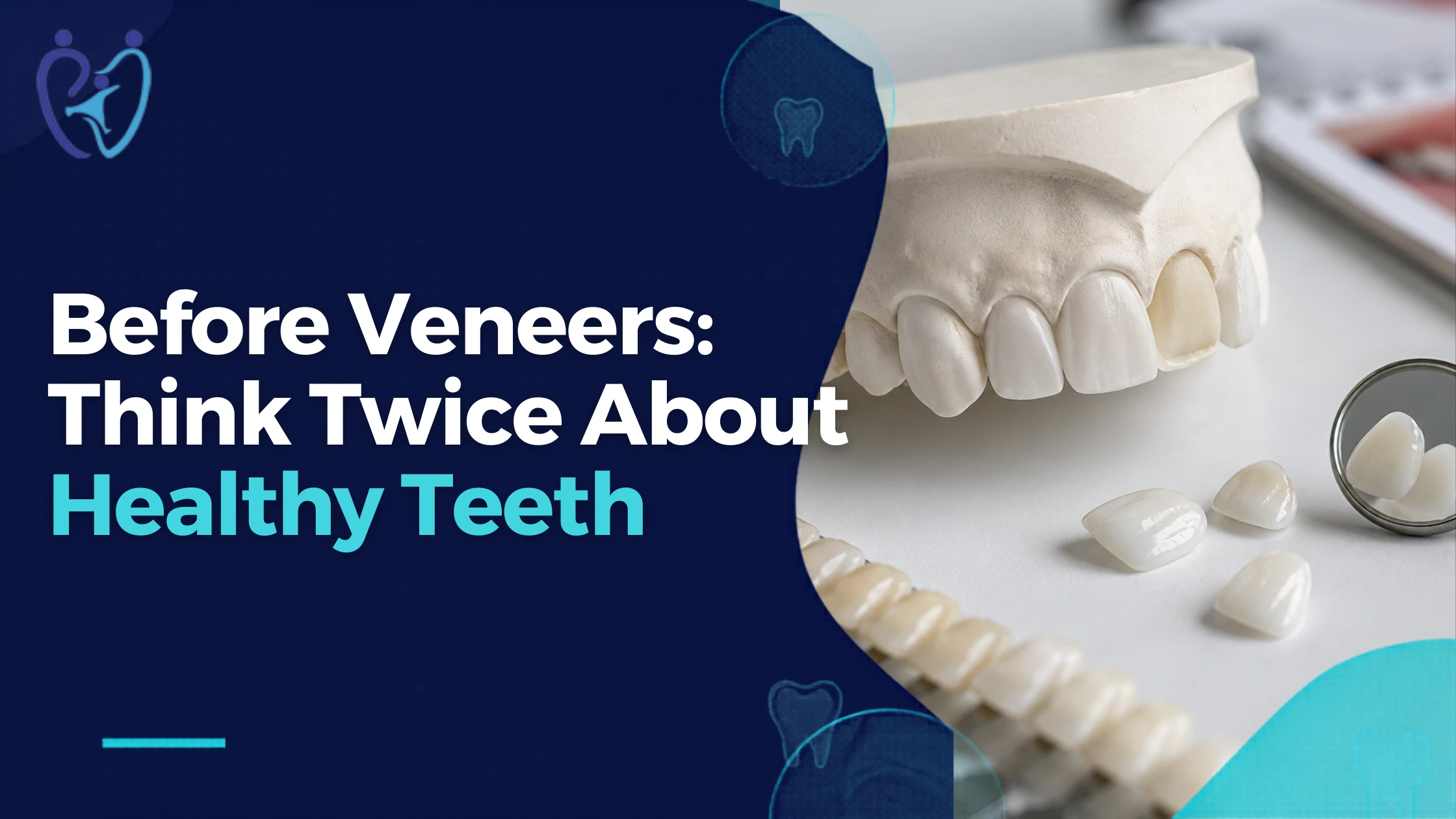
Nobody connects their 2 AM scrolling habit to a cracked molar. But they probably should.
Veneers can change the colour, shape and proportions of visible teeth quite dramatically. That is exactly why they attract people who want a noticeable smile transformation. But there is a detail that deserves more attention before treatment begins: some veneer procedures require healthy enamel to be permanently altered.
Good cosmetic dentistry should not begin with the question, "How quickly can we change these teeth?" It should begin with a more careful one: "Do these healthy teeth actually need to be altered?"
Veneers are not simply covers that can be removed later
It is easy to think of a veneer as a thin shell placed over the front of a tooth. Technically, that description is correct, but it can make the treatment sound more reversible than it really is.
Depending on the type of veneer, the tooth may need some enamel preparation so the restoration fits naturally rather than looking bulky. Once enamel has been removed, it does not grow back.
That makes the decision different from trying a new hairstyle or changing a pair of glasses. The tooth has been physically changed.
For someone with heavily stained, worn, chipped or irregular teeth, that trade-off may sometimes be reasonable. Altering several completely healthy teeth purely to follow a particular smile trend deserves much more thought.
Start With The Problem, Not With Veneers
Before choosing treatment, define what actually bothers you.
Is it the colour? One chipped edge? A small gap? Slight crowding? Uneven tooth lengths?
Different concerns may have very different solutions. A person unhappy mainly with tooth colour, for example, may want to discuss whitening before considering veneers. Minor contour concerns may also have more conservative options in selected cases.
This is where cosmetic dentistry planning matters. Veneers are one treatment option, not the automatic answer to every aesthetic concern.
A useful consultation should consider:
- Which teeth genuinely need treatment
- Whether the enamel and gums are healthy
- What result the patient is expecting
- Whether a less invasive option could address the concern
- How future maintenance may affect the decision
Healthy Enamel Has Value
Natural enamel is remarkably useful tissue. It protects the softer layers of the tooth underneath and handles years of chewing, temperature changes and everyday wear.
Preserving it where possible is generally preferable to removing sound enamel without a clear reason.
That does not make veneers a "bad" treatment. The problem is unnecessary treatment.
Social media can blur this distinction. Perfectly uniform, very white teeth may look appealing on a screen, but real teeth naturally vary slightly in shape, shade and position. A smile does not need to look manufactured to look healthy or attractive.
Sometimes the more responsible dental decision is to leave a healthy tooth alone.
Veneers Also Come With A Future Commitment
People often focus on how veneers will look immediately after treatment. It is worth thinking ten or fifteen years ahead too.
Veneers are restorations. Like other dental restorations, they may eventually chip, wear, become damaged or require replacement. Gum levels can also change over time, affecting how the margins look.
Once teeth have been prepared for veneers, future dental care has to account for those altered teeth.
Before committing, ask practical questions:
- How much natural enamel would need to be removed?
- What happens if a veneer chips?
- Will the restorations eventually need replacement?
- Could teeth grinding affect them?
- How will they be maintained?
Those questions are just as important as selecting the final shade.
Be Cautious With Very Fast Smile Transformations
If several healthy teeth are being altered, there should be a clear clinical and aesthetic reason for each one.
A good cosmetic dentistry discussion should allow room for saying no, treating fewer teeth, or choosing something more conservative. Patients should understand what will happen to their natural teeth before giving consent.
Be particularly cautious if the conversation focuses almost entirely on the final appearance while barely discussing tooth preparation, maintenance or alternatives.
A Better Result Starts With A Considered Decision
Veneers can be useful for the right patient and the right dental problem. What they should not become is a default solution for healthy teeth simply because a more uniform smile is possible.
Dr. Pol's Dental Clinic provides cosmetic dentistry services in Kharghar. If you are considering veneers, the clinic can assess your teeth and discuss suitable options while taking the condition of your natural tooth structure into account.
Not sure if veneers are the right choice for you? Book a personalised consultation at Dr Pol's Dental Clinic, Kharghar, we assess the health of your natural teeth first, before recommending any treatment. Schedule your appointment today.
FAQs
1. Do veneers always require shaving the teeth?
Not always to the same extent. The amount of preparation depends on the type of veneer, tooth position and planned result.
2. Does enamel grow back after veneer preparation?
No. Enamel removed during tooth preparation does not regenerate.
3. Can veneers be placed on healthy teeth?
They can be considered, but the benefit should justify permanently altering healthy tooth structure.
4. Are veneers permanent?
The tooth preparation can be irreversible, while the veneers themselves may eventually need repair or replacement.
5. Should I consider whitening before veneers?
If colour is your main concern, whitening may be worth discussing first. The appropriate option depends on the condition and type of discolouration.
