
Why Your Teeth Move Back After Braces And How To Prevent It
Think of a garden fence after a storm. You straighten the posts, but if you take the supports away before the soil has firmed up, the posts lean right back to where they were. Teeth behave in much the same way.
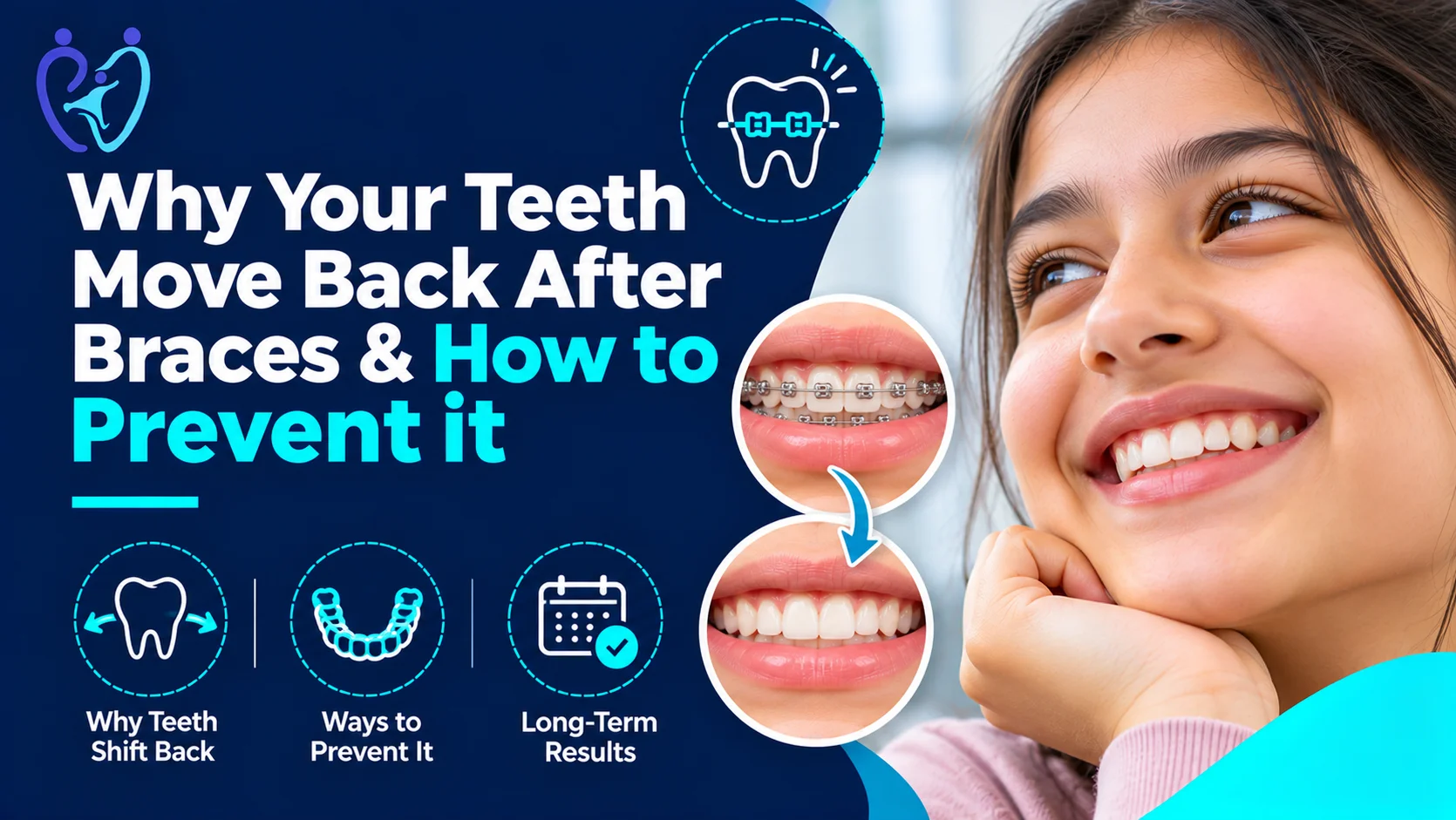
Teeth move back after braces because the gum fibres and bone around them keep a “memory” of their old position. This is called relapse. It’s common, it can start within weeks of braces coming off, and the most reliable way to prevent it is wearing a retainer exactly as your orthodontist advises, for as long as advised.
Teeth aren’t fixed in concrete
Each tooth sits in a socket, held by tiny elastic fibres that connect the root to the bone. Braces work by stretching and squeezing those fibres so the bone slowly reshapes around the tooth’s new position.
Here’s the catch. The bone settles within a few months. Some of the gum fibres take much longer, often a year or more, and the fibres around a tooth that was rotated are particularly stubborn. Until they adapt, they keep tugging the tooth towards where it started.
That’s why the day the braces come off isn’t the end of treatment. It’s the start of the part that decides whether the result lasts.
What pulls teeth out of line
Fibre memory is the main reason, but it isn’t the only one. A few other forces quietly work against a straightened smile:
- natural ageing, since lower front teeth tend to crowd slightly over the years whether or not someone has had braces
- tongue habits, such as pushing against the front teeth when swallowing
- night grinding or clenching
- continuing jaw growth in teenagers who finish treatment young
- simply not wearing the retainer
Most parents expect that last one to be the rarest. In practice it’s by far the most common. A retainer left in a drawer for six months does more damage than all the other causes combined.
People often blame wisdom teeth too. It’s a popular belief, but crowding happens even in people who never develop wisdom teeth, so they’re rarely the whole story.
Retainers: the unglamorous hero
There are three main kinds, and your orthodontist will suggest one based on how your teeth moved.
Clear removable retainers look like thin, transparent trays. They’re discreet and easy to wear at night. Wire and acrylic retainers, the more traditional type, are sturdy and allow small adjustments. Fixed retainers are a thin wire bonded behind the front teeth, which means there’s nothing to remember to put in, though they do need careful cleaning around.
None of them work unless they’re actually in your mouth.
A realistic wearing pattern
Instructions vary from person to person, so follow what your own orthodontist tells you. As a broad picture, though:
- the first few months usually call for wearing the retainer most of the day
- after that, most people move to night-time wear only
- many orthodontists now recommend nights for the long term, with no fixed end date
That last point surprises people. If your teeth have been straightened, think of the retainer the way you think of a toothbrush. It isn’t a phase. It’s part of keeping what you’ve paid for.
Habits that quietly undo good work
A few small things cause a surprising amount of trouble:
- wrapping a retainer in a tissue at mealtimes, which is how most of them end up in the bin
- cleaning it with hot water, which can warp clear retainers so they no longer fit
- skipping a few nights, then forcing it back in when it feels tight
- ignoring a fixed retainer wire that has come loose from one tooth
If your retainer feels tight after a gap, that’s your teeth telling you they’ve started to shift. Don’t wait for it to stop fitting altogether. Book a check at your dental clinic in Navi Mumbai while the movement is still small.
What if they’ve already moved?
Minor shifting caught early can sometimes be guided back with a retainer alone, if it still fits. More noticeable relapse usually needs active treatment again, either braces or clear aligners, depending on how much the teeth have moved and what suits your lifestyle.
The cost and time involved in a top-up are usually far smaller than the original treatment. Waiting tends to change that, which is the honest reason to act early.
A straight smile isn’t a finished project. It’s a kept one.
Keeping your smile on track
At Dr. Pol’s Dental Clinic in Kharghar, we offer traditional braces and clear aligners for teens and adults, with honest advice on what your teeth actually need. If you’re looking for a dental clinic in Navi Mumbai to check whether your teeth have shifted, call us to book a visit. We’re open daily from 10 AM to 10 PM.
Frequently asked questions
1. How soon can teeth move after braces come off?
Movement can begin within days or weeks, which is why retainers are usually fitted straight away.
2. Do I really have to wear a retainer forever?
Many orthodontists now recommend night-time wear for the long term. Your own orthodontist will advise based on how your teeth were moved.
3. My retainer feels tight. Is that bad?
It usually means your teeth have shifted slightly since you last wore it. Get it checked soon at a dental clinic in Navi Mumbai rather than forcing it.
4. Can relapsed teeth be straightened again?
Yes. Small changes can sometimes be corrected with a retainer, while larger ones may need braces or clear aligners again.
5. Do wisdom teeth cause teeth to move after braces?
They’re often blamed, but crowding also happens in people without wisdom teeth. Fibre memory, ageing and inconsistent retainer wear are more common causes.
