
Can A Root Canal-Treated Tooth Get Infected Again? Signs That Need A Second Look
It’s a story dentists hear a lot. The root canal was done a few years ago. The tooth has been fine ever since, so fine you’d half forgotten which one it was. Then one morning there’s a small bump on the gum above it, and a dull ache when you bite down.
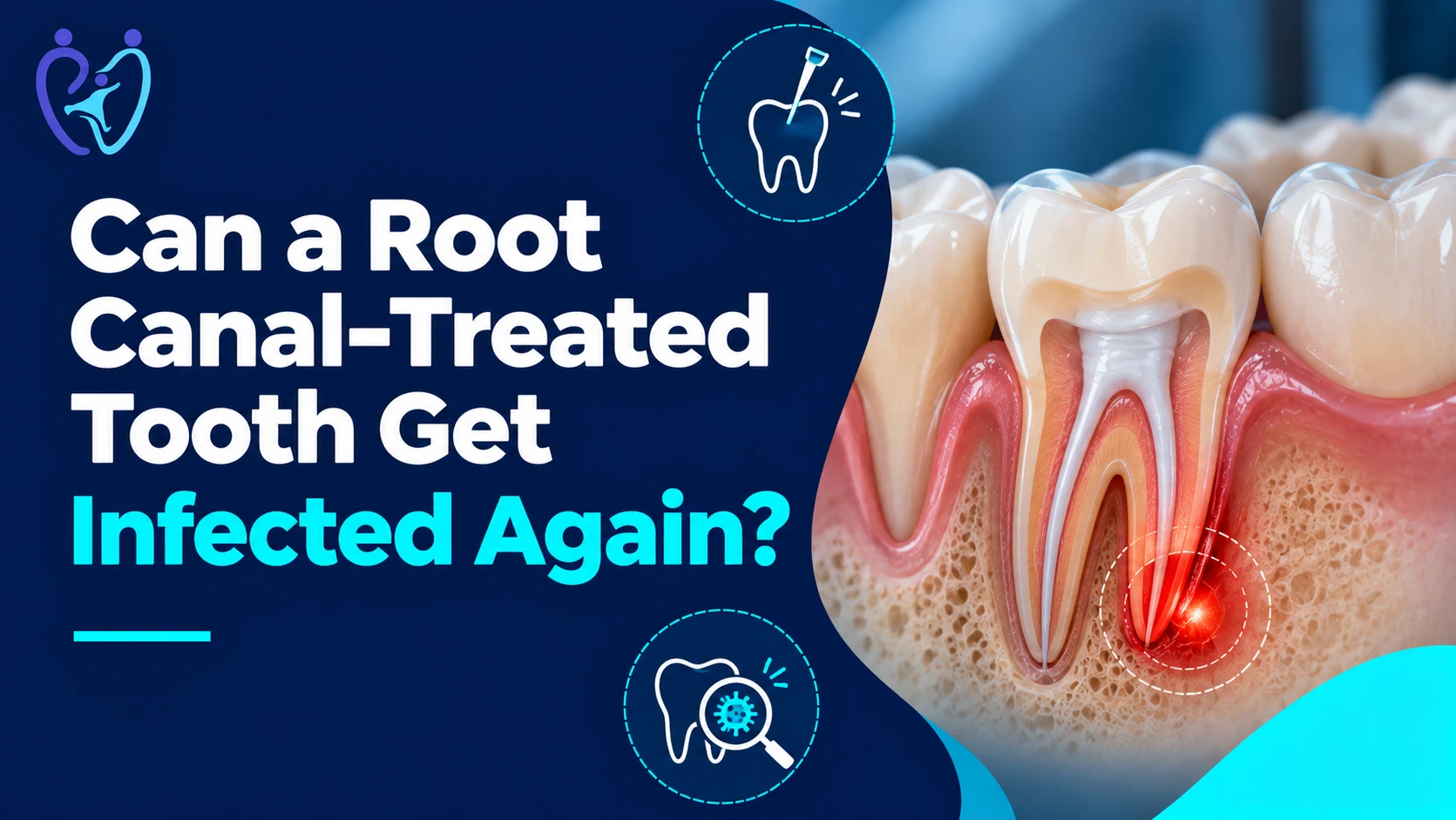
Yes, a root canal-treated tooth can get infected again. It doesn’t happen often, and most treated teeth last for many years. But bacteria can find their way back in, sometimes long after treatment. The good news is that a reinfected tooth can often still be saved if it’s checked early.
A treated tooth isn’t sealed off forever
People tend to think of a root canal as the end of the story. The nerve’s gone, so what could possibly hurt?
The tooth itself can’t feel hot or cold any more. But the bone and gum around the root are very much alive, and that’s where a returning infection shows up. It’s also why some reinfections cause no pain at all for months.
So how do bacteria get back in? Usually through one of these:
- a crown or filling that has started to leak at the edges
- new decay forming underneath an old crown
- a temporary filling left in place far longer than intended
- a small extra canal in the root that’s hard to spot and wasn’t fully cleaned
- a crack in the root, often from heavy chewing or night grinding
That third one is more common than you’d think. Life gets busy, the tooth stops hurting, and the appointment for the permanent crown slips by six months. Meanwhile saliva slowly seeps in around a filling that was only ever meant to last a few weeks.
The signs, roughly in the order people notice them
Reinfection rarely announces itself with dramatic pain. It creeps in.
First, there’s often a vague tenderness when biting. Not sharp, just a sense that the tooth feels “different” or slightly taller than its neighbours.
Then the gum starts giving clues:
- a small pimple-like bump near the root, which may come and go
- a bad taste in the mouth, especially if that bump drains
- gum that looks puffy or darker around one tooth
Later signs are harder to ignore:
- swelling in the gum, cheek or jaw
- a throbbing ache that builds through the day
- the tooth itself turning greyish
- a crown that feels loose or rocks slightly
If you notice anything on the first list, that’s the time to see a dentist in Kharghar, not when you reach the second.
Not every twinge means trouble
It’s worth keeping this in proportion. Some discomfort after a root canal is normal, especially in the first week or so, while the surrounding tissue settles.
Other things can mimic reinfection too. A new filling sitting slightly high makes biting sore. Gum inflammation around a tooth can feel like it’s coming from the root. And sometimes the pain belongs to the tooth next door.
That’s exactly why guessing doesn’t help. An X-ray does.
What a second look involves
The dentist will examine the tooth, check the gum and the bite, and take a digital X-ray. Reinfection often shows up as a small dark area around the tip of the root, sometimes long before you’d feel anything.
From there, the options depend on what’s found. Many reinfected teeth can be treated again: the old filling material is removed, the canals cleaned once more and resealed, and the tooth restored. If the root has cracked, saving the tooth may not be realistic, and your dentist should tell you that plainly so you can plan what comes next.
A good dentist in Kharghar will walk you through those choices before touching anything. You should leave knowing what’s wrong and why the recommended option makes sense.
Protecting the tooth you’ve already invested in
A root canal is time and money well spent. A few habits help it last:
- get the permanent crown or filling done promptly after treatment
- keep up brushing and flossing around the treated tooth, edges included
- go for routine check-ups so leaks and new decay are caught early
- mention night grinding to your dentist if you wake with a sore jaw
None of this is complicated. It just tends to get forgotten once the pain has gone.
Here’s the broader point. A tooth that stops hurting hasn’t necessarily stopped needing attention. Quiet doesn’t always mean healed.
A second opinion, close to home
At Dr. Pol’s Dental Clinic, root canal treatment is offered for adults and children, and every procedure is explained clearly before it begins. If a treated tooth is bothering you and you’re looking for a dentist in Kharghar, call us to book a visit. We’re open daily from 10 AM to 10 PM.
Frequently asked questions
1. How long after a root canal can infection come back?
It can happen within months or many years later. It’s often linked to a leaking crown or filling, new decay, or a crack in the root.
2. Can a reinfected tooth be saved?
Often, yes. The canals can usually be cleaned and sealed again, unless the root is cracked or badly damaged.
3. Why doesn’t my treated tooth hurt with cold drinks?
The nerve was removed during treatment, so the tooth can’t sense temperature. Pain from reinfection comes from the tissue around the root instead.
4. Is some pain after a root canal normal?
Mild soreness for a few days is common. Pain that returns weeks or months later, or comes with swelling or a gum bump, needs checking.
5. When should I see a dentist in Kharghar about it?
As soon as you notice tenderness on biting, a gum bump or a bad taste. A dentist in Kharghar can confirm the cause with an X-ray and explain your options.
